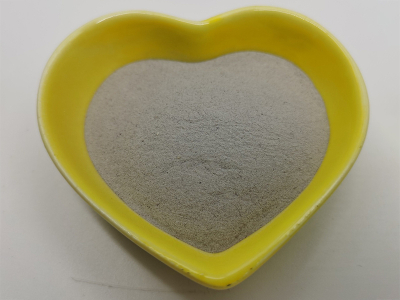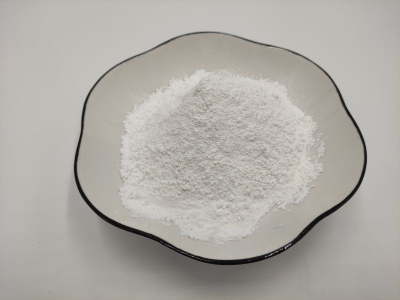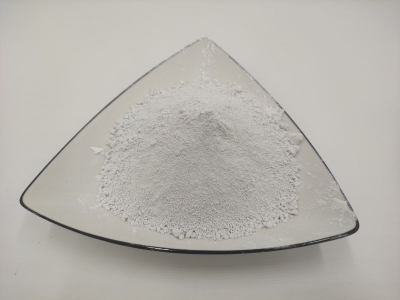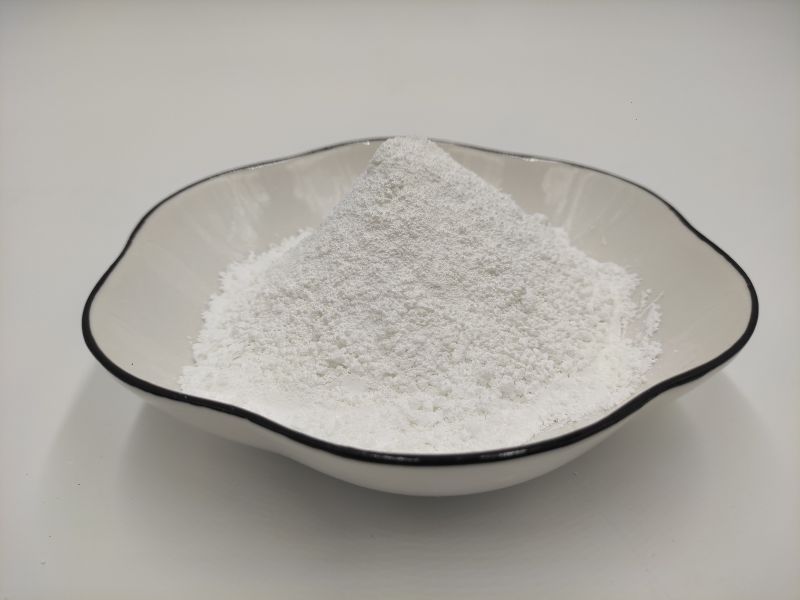
Tianium Dioxide
Product Features:
High glossy.
Very easy wetting anddispersing.
High Whiteness.
Blue undertone.
Application Areas:
R-2196 is suitable forsolvent-based paint thatrequires high colorperformance (furniturepaint and industrial paint).
Product Name: Titanium Dioxide
Index | R-2196 |
TiO2% (1S0 591-1) | 94% |
CIEL*(GB/T 1864-2012) | 95.5 |
Reducing Power (TCS) | 1950 |
PH Value (lSO 787-9) | 7.0 |
Oil Absorption (lSO 787-5) | 19g/100 g |
Residue on 45μm(lS0 787-18) | 0.01% |
Resistivity (lSO 787-14) | 100Ω-m |
Volatiles at 105℃(ISO 787-14) | 0.3% |
Typical Properties:
Index | R-2196 |
Processing Method | Sulfate |
Crystal Form | Rutile |
Inorganic Surface Treatment | ZrOz, ALO: |
Organic Surface Treatment | Yes |
Classification (lS0 591-1) | R2 |
Color (lS0 787-25) | △E≤0.5 |
Relative Scattering Power (lSO 787-24) | 95%-105% |
Density(lS0 787-10) | 4.0 g/cm³ |
Dispersion in Polyester System(GB/T 21868.3-2008) | ≤27.5 μm |
Titanium Dioxide (TiO₂) is a white, odorless, and chemically stable inorganic compound extensively used in various industrial and consumer applications due to its high refractive index, opacity, UV resistance, and non-toxicity. As a critical pigment, UV blocker, and performance additive, titanium dioxide plays an indispensable role in industries such as coatings, plastics, paper, food, cosmetics, and pharmaceuticals.
This comprehensive, SEO-optimized technical article explores the chemical structure, manufacturing methods, material grades, application performance, international standards, and safety regulations associated with titanium dioxide. It is written for chemical engineers, manufacturers, R&D professionals, and industrial buyers seeking authoritative knowledge on this essential material.
What Is Titanium Dioxide?
Titanium Dioxide (TiO₂) is a white pigment derived from titanium-bearing minerals like rutile, anatase, and ilmenite. It exists in several crystalline forms, with rutile and anatase being the most commercially relevant.
Basic Properties
| Property | Value / Description |
|---|---|
| Chemical Formula | TiO₂ |
| Molecular Weight | 79.87 g/mol |
| Appearance | White powder |
| Melting Point | ~1,843°C |
| Refractive Index | Rutile: ~2.73, Anatase: ~2.55 |
| Density | Rutile: ~4.23 g/cm³, Anatase: ~3.9 g/cm³ |
| Solubility | Insoluble in water, soluble in hot acids |
| Particle Size | 150–300 nm for pigment grade, <100 nm for nano-grade |
| Opacity | High (excellent light scattering) |
| UV Absorption | Strong, especially in nano-form |
Grades and Crystal Structures
1. Rutile Titanium Dioxide
Higher opacity and weather resistance
Ideal for outdoor coatings, plastics, and automotive paints
Surface-treated for dispersion and durability
2. Anatase Titanium Dioxide
Higher brightness, but less UV stability
Used in interior paints, paper, and cosmetics
3. Nano Titanium Dioxide
Used as a UV filter in sunscreens and self-cleaning surfaces
Requires regulatory compliance due to nanoscale toxicity concerns
Engineering Insight: Rutile TiO₂ has a higher refractive index and is preferred in high-performance applications requiring light scattering, gloss retention, and resistance to chalking.
Manufacturing Methods
Titanium dioxide is produced from raw ores via two primary processes:
1. Sulfate Process
Uses ilmenite and sulfuric acid
Generates anatase and rutile grades
Lower cost but more waste by-products
2. Chloride Process
Uses rutile or synthetic feedstock (e.g., slag)
Produces purified rutile TiO₂
Cleaner and more efficient, widely used in modern production
Chloride-grade TiO₂ offers higher brightness, better purity, and lower heavy metal contamination.
Industrial Applications
| Industry | Function of TiO₂ | Grade Used |
|---|---|---|
| Paint & Coatings | Pigment, opacity, UV resistance | Rutile (chloride) |
| Plastics | Whitening agent, UV protection, heat resistance | Rutile (surface treated) |
| Paper | Opacity, printability, brightness | Anatase |
| Cosmetics | UV filter in sunscreens, colorant in makeup | Nano / Anatase |
| Food | Colorant (E171 in EU), opacity in confectionery | Anatase (food-grade) |
| Pharmaceuticals | Tablet coating, capsule coloring | Anatase (pharma-grade) |
| Ceramics | Whiteness, glaze stabilizer | Technical rutile |
| Textiles | Delustering agent in synthetic fibers | Anatase |
Performance Advantages
Excellent Light Scattering: Superior brightness and opacity
UV Resistance: Protects materials from degradation
Thermal Stability: Suitable for high-temperature processes
Non-reactivity: Chemically inert in most environments
Non-toxic in macroform: Safe for food and cosmetics (except nano-form, see below)
Regulatory Standards and Compliance
Chemical and Safety Regulations
CAS Number: 13463-67-7
REACH (EU): Regulated as suspected carcinogen (inhalable powder) – labeling required since 2021
OSHA / NIOSH (USA): Classified as nuisance dust; PEL: 15 mg/m³ (total dust)
IARC Classification: Group 2B (possibly carcinogenic if inhaled in large quantities over time)
Product-Specific Regulations
Food Additive (E171):
Permitted in many countries, banned in the EU from August 2022
Still used in U.S., Canada, and Asia under strict purity limits
Cosmetic Use:
Nano TiO₂ allowed with size restrictions and coating requirements
Must meet EU Cosmetic Regulation (EC) No. 1223/2009
Quality Standards
ISO 591-1: Classification of pigmentary TiO₂
ASTM D476: Standard classification for TiO₂ pigments
FDA 21 CFR 73.575: U.S. food-grade TiO₂ specifications
JIS K 5101-13: Japanese industrial pigment standards
Handling and Operational Guidelines
Storage:
Keep in dry, cool, and ventilated environments
Avoid inhalation during powder handling – use dust masks or extraction systems
Prevent contamination from moisture or reactive chemicals
Safety Measures:
Use PPE (gloves, goggles, dust masks) in handling
Comply with MSDS/SDS recommendations
Avoid prolonged airborne exposure to nano-TiO₂
Frequently Asked Questions (FAQs)
Q1: Is titanium dioxide safe?
A: In pigment and bulk forms, TiO₂ is generally recognized as safe. However, inhalation of ultrafine (nano) particles over prolonged periods can pose health risks. Regulatory labeling and worker protection are required in powder-handling environments.
Q2: What is the difference between rutile and anatase?
A: Rutile is more UV-stable and used in coatings and plastics. Anatase is brighter and preferred in paper, cosmetics, and food. Rutile offers better durability in outdoor applications.
Q3: Why is titanium dioxide banned in EU foods?
A: The European Food Safety Authority (EFSA) concluded in 2021 that it could not rule out potential genotoxicity of TiO₂ nanoparticles in food applications. This led to a precautionary ban, even though many countries still consider it safe.
Q4: Can titanium dioxide be used in sunscreens?
A: Yes. Nano-grade TiO₂ is widely used as a physical UV blocker in sunscreens due to its safety, stability, and transparency on the skin. Products must meet cosmetic regulations concerning particle size and coating.
Q5: How does TiO₂ improve paint quality?
A: It increases whiteness, brightness, and hiding power, allowing for better coverage with less paint. It also protects substrates from UV-induced degradation and chalking.